


For veterans who have served our country, the return home often feels like the start of a new battle. Many feel isolated and lonely, while others turn to substance abuse for relief.
What people don’t know is that war can create invisible wounds. Those who have been in service must deal with post-traumatic stress disorder and depression.
However, life doesn’t have to be this way.
Our veteran’s recovery center in Illinois is here to help you heal from your past. We provide evidence-based treatments and give you access to a community of service members.

Let’s talk about veteran-specific treatment programs in Illinois.
The Importance of Specialized Care for Veterans
Veterans face a unique set of challenges that a regular treatment program can’t address. The intense pressure of combat zones can leave lasting psychological and emotional damage.
According to the US Department of Veterans Affairs, 23% of veterans using VA health care developed PTSD. Women, in particular, have higher rates due to military sexual trauma.
Not only that, some veterans experience chronic pain from injuries, sleep disorders, and survivor’s guilt.
Most civilian treatment centers are not equipped to handle the complexities of military trauma. Veterans may also struggle to connect with people who don’t understand what it’s like.
This disconnect can cause veterans to drop out of PTSD and addiction treatment.
The Difficulties of Reintegration
Another challenge veterans face is reintegration. Veterans may experience unemployment and housing instability. They can also lose touch with their family.
Yet, this doesn’t have to be your life moving forward.
Through counseling, peer support, and skills training, you can rebuild your life and gain control over your future.

A Healing Environment for Veterans: What Treatment Looks Like
For veterans, healing happens when you’re in the right environment with the right people. That’s exactly what Illinois Recovery Center provides!
Our mental health services are designed for veterans who have experienced traumatic events.
Here’s what to expect at Illinois Recovery Center’s veterans program.
1. Trauma-Informed Care
Trauma-informed care is a treatment approach that recognizes the impact of trauma on a patient’s life.
Many patients who struggle with trauma don’t understand its impact on their lives. Some avoid the topic altogether. As a result, treatment providers may not ask important questions about trauma.
This can be problematic, as the root cause of the trauma isn’t addressed.
In trauma-informed care, health care professionals recognize traumatic experiences. At the same time, they focus on your physical and emotional safety.
Illinois Recovery Center creates an environment that’s secure and free from triggers. Over time, we build trust with survivors, especially with those who struggle with authority.
2. Individualized Treatment Plans for Veterans
Illinois Recovery Center carefully assesses each patient to determine the right level of care. Depending on your needs, your doctor may recommend you for the following programs.
- Outpatient Treatment: Outpatient treatment is for veterans who prefer flexibility. You’ll attend day treatments, and you get to return home at night.
- Inpatient Treatment: Inpatient or residential treatment is for veterans who need a high level of care. You’ll stay full-time at the facility, which is necessary for suicide prevention.
- Detox: In detox, medical professionals monitor your withdrawal symptoms and ensure your well-being. If you’re struggling with drug and alcohol addiction, you may start with detox.
- Partial hospitalization: Partial hospitalization is an intensive program. It provides veterans with the same therapies as inpatient care. The only difference is that you don’t have to stay at the facility overnight.
3. Dual Diagnosis Services
As you may know, military service exposes veterans to life-threatening situations that can lead to trauma. When untreated, the trauma can develop into mental health issues.
Unfortunately, instead of addressing the mental health condition, some veterans choose to take substances. Ultimately, they develop a substance use disorder.
Co-occurring disorders happen when an individual has a mental health disorder and drug addiction. This can be difficult to treat as both conditions affect each other.
Dual diagnosis is a vital treatment for veterans suffering from co-occurring disorders. It simultaneously treats mental illness and addiction using evidence-based methods.
4. Trauma-Focused CBT
Cognitive behavioral therapy, or CBT, is a type of therapy that challenges negative thoughts and behaviors. It’s an effective therapy for treating PTSD, depression, and substance use disorder.
CBT can be a life-changing treatment for veterans. It challenges thoughts that may have been useful in combat, but are no longer helping them in civilian life.
Veterans, for instance, may feel that if they let their guard down, something bad will happen. However, this mindset can lead to anxiety and an inability to trust others.
In CBT, you’ll learn how to process combat experiences, address negative thoughts and develop healthier habits. Over time, you can reduce your emotional distress and regain control of your actions.
5. Post-Traumatic Stress Disorder Medications
Therapy is the best treatment for PTSD. Yet, sometimes it may not be enough, especially if you’re a veteran. The flashbacks and nightmares can feel like a constant battle.
In this case, medication may be able to help you manage PTSD.
At Illinois Recovery Center, we take an individualized approach to PTSD medications. We conduct a thorough psychological evaluation and ensure your wellness above all else.
Through medication, we can reduce panic attacks, lessen mood swings, and improve your sleep. It can be the break you need to finally feel more stable.
6. Family Therapy
Being away from family can be a challenge, and many veterans come home to broken relationships. Not only that PTSD and other mental health disorders make it harder to reconnect with your loved ones.
Family therapy is one of the best ways to mend your relationships.
In family therapy, you and your family come to the treatment center as part of the veterans program. A licensed counselor will facilitate the session and help everyone understand the effects of trauma.
Family therapy gives your loved ones a voice and a chance to process their own experiences. The goal of this therapy is to allow the family to move forward together.
7. Holistic Therapies
When you’re dealing with trauma and substance use disorder, holistic therapies can be a way for you to heal your mind and spirit. This can be life-changing for veterans.
Holistic therapies are mental health services that can address years of grief and stress. It involves being more mindful through routine and movement.
Below are just some of the holistic therapies at our treatment facility.
- Yoga and Exercise: Yoga uses body movement to improve your strength and relaxation. It can release endorphins, which elevate your mood and lessen cravings.
- Nutritional Counseling: Addressing nutritional deficiencies is a great way to restore your biochemistry. At our treatment center, you can receive diet guidance from a nutritionist.
- Art and Music Therapy: Art and music allow individuals to express pent-up emotions. You can try drawing, sculpting, drumming, and even dancing!
- Reiki: Reiki is a holistic treatment that originated in Japan. Here, a practitioner reduces depression and anxiety by placing their hands on your body.
- Somatic Psychotherapy: Somatic psychotherapy uses physical sensations and breathing to release tension. It improves the connection between your mind and body to heal trauma.
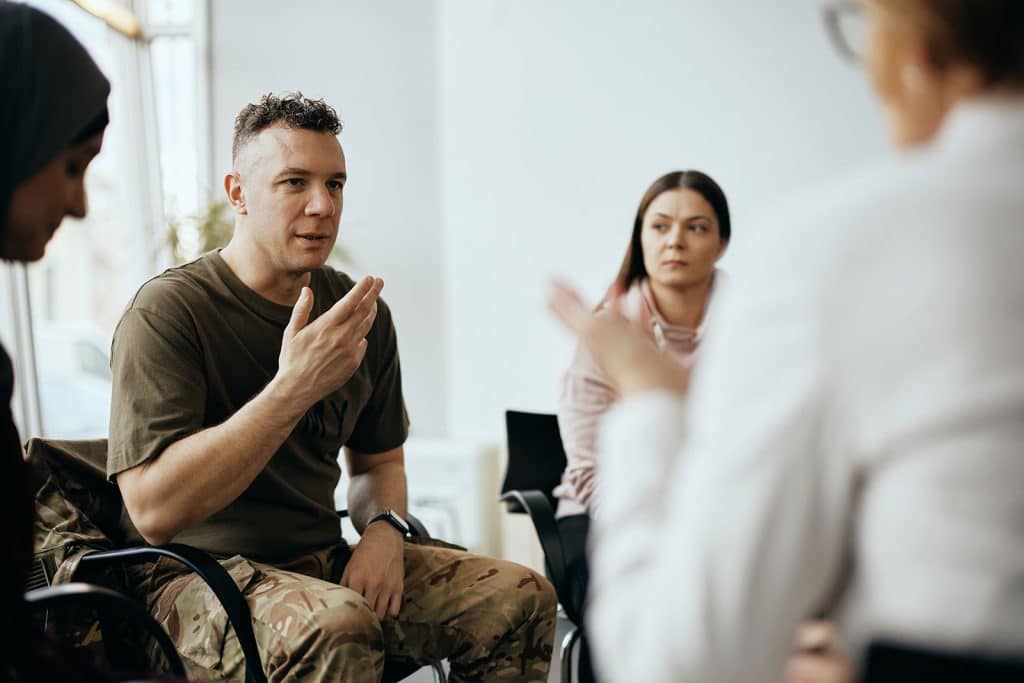
8. Veteran Support Groups
Veterans often carry experiences that are difficult to explain to civilians. In this case, having a support system that understands is one of the most powerful tools for healing.
Peer support from other veterans allows you to feel seen and heard. There’s no need to censor yourself as the facilitators are also veterans themselves.
Illinois Recovery Center has a wide network of support groups that can help veterans feel less isolated. We hold meet-ups with other veterans and addiction treatment alumni. This gives you a safe space to share your experiences.
Accessible Treatment for Veterans
We know that seeking substance abuse treatment can feel like a huge step. You may even be wondering whether you can afford treatment.
Let us put your mind at ease.
The good news is you can receive treatment for PTSD and drug addiction. Veterans may get medical assistance through the US Department of Veterans Affairs (VA).
VA Benefits and How They Can Make Treatment Affordable
VA programs provide veterans with treatment for PTSD, military sexual trauma, substance abuse, and alcohol use. That said, the healthcare system can make claiming your benefits feel overwhelming.
Don’t worry. Illinois Recovery Center can help you determine your VA eligibility. Let us help you through the process so you can finally receive trauma and addiction treatment.
Veterans Recovery Center: Take the First Step Today
For many veterans, coming home isn’t the end of the war. It’s just the beginning of a struggle that’s even more difficult to talk about.
If you’re dealing with PTSD, anger, and addiction, you’re not weak, and you’re definitely not alone.
At Illinois Recovery Center, we see you, and we’re here to help you overcome these challenges. There’s no judgment at our facility; only genuine people who care.
If you’re ready to take the first step, you can call our veterans crisis line today. We’re happy to discuss the treatment options available to you!