

Alcohol is a common part of many cultures and celebrations, but its effects are not the same for everyone. These beverages can have varying alcohol content, which can be harmful if you don’t know what you’re consuming.
Understanding the different types of alcohol is the first step to making informed decisions. So, read on to learn all about hard alcohol and see how it can affect your body.
What Is Hard Alcohol?
Hard alcohol or hard liquor is a beverage with a high alcoholic content. It’s produced through a distillation process.
After fermentation, the distillery boils a fermented mash to extract pure alcohol. Afterward, it mixes the distilled alcohol into beverages to create hard liquor.
Hard liquor can have varying amounts of alcohol. The alcohol concentration can range from 35% to 95% alcohol by volume (ABV).
Hard liquor is meant to be mixed with juice or tonics to dilute its strength. However, certain distilled beverages, like whiskey, are sipped slowly in small servings.

Are Hard Alcohols More Dangerous?
Drinking hard liquors can be riskier than low alcohol drinks because it can be difficult to recognize when to stop.
The high ABV means you can drink much more of it in a short period of time.
It takes around 10 minutes for alcoholic drinks to kick in. Due to the delayed effects, people don’t realize how much pure alcohol they’ve consumed until it’s too late.
If you’re drinking alcohol, keep in mind that higher-strength drinks have a higher risk of overconsumption.
How Can You Tell If Your Drink Has a High Alcohol Content?
Understanding the different alcohol levels of hard liquor can help you make safer choices. Here’s how you can determine if a drink has high alcohol content.
1. Check the Label
Always check the label for the alcohol content. In liquers, alcohol content is usually listed in one of two ways.
- ABV: First, it can be listed as ABV or alcohol by volume. ABV is a direct indication of the percentage of pure alcohol in the beverage. For instance, a distilled spirit with 40% ABV means it’s composed of 4 parts alcohol and 6 parts of other ingredients.
- Proof: Another way alcohol may be listed on labels is the proof. Proof is computed as two times the ABV. Therefore, a 40% ABV can also be listed as 80 proof.
To put it simply, hard drinks are at least 35% ABV or 70 proof.
2. Look at the Type of Beverage
Certain drinks have a higher alcohol content.
For example, vodka and bourbon must be at least 40% ABV or 80 proof, based on US regulations. In comparison, beer, hard cider, and seltzers have lower alcohol percentages.
Additionally, mixed drinks, which combine hard liquor with juice, can also be deceptive. Fruit juice and sugar can mask the flavor of alcohol, making it impossible to tell its strength.
For your safety, it’s important to consider the type of beverage to determine how much you should consume.
3. Use Your Senses
Always be cautious when consuming alcoholic beverages.
Drinks that give you a burning sensation may indicate a higher alcohol content. Moreover, if the beverage has a strong aroma, it could have more alcohol.
Lastly, know the terms used to indicate potency. A drink “on the rocks” or “straight” means it’s undiluted.
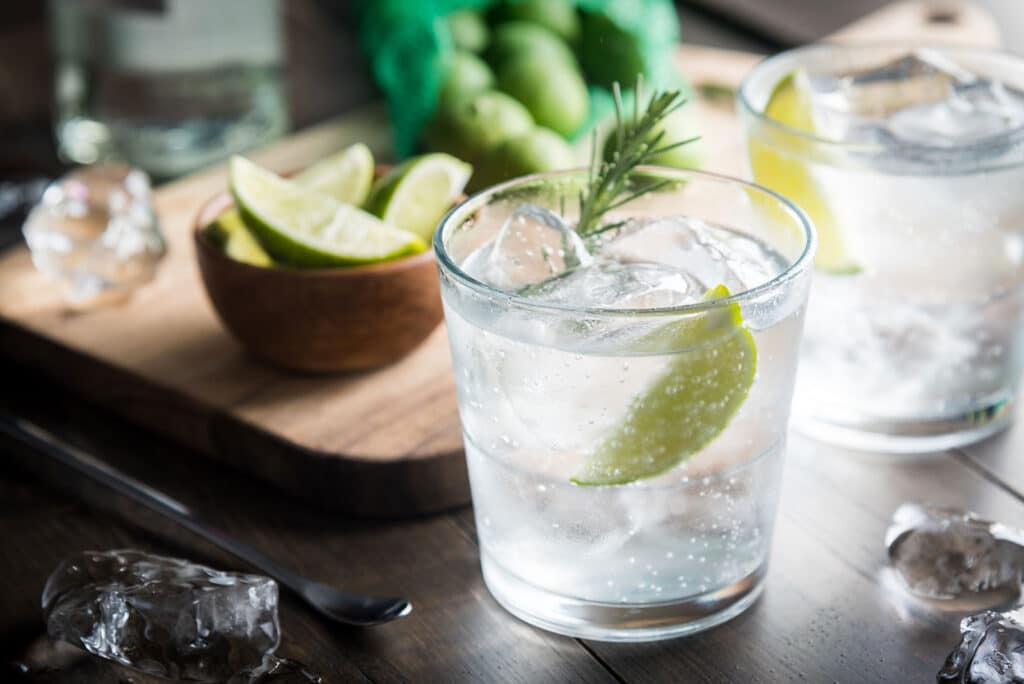
The Most Common Hard Alcohols
Hard alcohols come in many forms, each with its own production method. To help you determine potency, these are the types of hard liquor to look out for.
- Vodka: Vodka is a clear, colorless alcoholic drink with a lack of unique flavor. It can contain between 40% and 55% alcohol.
- Tequila: Tequila is a distilled spirit made with agave from Mexico. It can have between 35% to 55% ABV.
- Bourbon: Bourbon is a type of whisky that’s made from corn and aged in oak barrels. Legally, bourbon must contain at least 40% ABV.
- Rum: Rum uses sugarcane as the main ingredient. This alcoholic beverage contains 40% ethanol after fermentation and distillation.
- Scotch: Scotch is a type of whisky from Scotland. It’s made from malted barley and has a minimum of 40% ABV.
- Cognac: Cognac is a brandy from France. It’s distilled twice in special pots and contains at least 40% ABV.
- Irish Whisky: Irish whisky is a triple-distilled beverage with a minimum alcoholic content of 40% ABV. It’s aged in casks, similar to bourbon.
- Gin: Gin is a distilled spirit that’s flavored with juniper berries and other botanicals. It’s at least 37.5% ABV.
- Sherry: Sherry is a fortified wine from Spain. The distillery adds grape spirit to wine to increase its alcohol content.
- Absinthe: Absinthe is an herbal spirit flavored with anise, wormwood, and fennel. Absinthe has an extremely high ABV ranging from 45% to 74%.
The Risks of Hard Alcohols
Hard alcohols contain much higher percentages of ethanol, which increases the risk of harm. Some of the risks of hard alcohol include the following.
- Rapid Intoxication: Consuming too much alcohol impairs your decision-making. It can lead to accidents due to a decrease in your reaction time.
- Alcohol Poisoning: Alcohol poisoning happens when your body is overwhelmed by alcohol. Severe alcohol poisoning causes coma and even death.
- Organ Strain: Drinking too much alcohol in a short time increases stress on your organs. It can lead to dehydration, nausea, vomiting, stroke, and high blood pressure.
- Alcohol Dependence: Regularly using hard alcohol results in intense highs. As a result, you have a higher risk of developing dependence.
Hard Alcohol and Addiction
Alcohol use disorder is a medical condition that happens after repeatedly drinking alcohol. People with this condition can’t stop drinking, even if they know the alcohol is causing harm.
You may have alcohol use disorder if you experience the following.
- You drink more than intended, and you’re constantly craving alcohol. You also have a high tolerance for alcohol.
- You spend too much money obtaining alcohol, and most of your time is spent recovering from hangovers.
- You use alcohol even in hazardous environments. Moreover, you miss work or school because of alcohol.
- You experience withdrawal symptoms when you’re not drinking alcohol.
If you notice any of these symptoms, it may be time to seek help from professionals.

Illinois Recovery Center – Your Partner in Overcoming Alcohol Addiction
Alcohol addiction is a complex health condition that can affect people from all backgrounds.
If you’re struggling with alcohol addiction, it doesn’t mean you lack willpower. It means you need appropriate care from healthcare professionals.
Illinois Recovery Center offers a safe and supportive environment to help you through this difficult time.
Don’t worry. There are evidence-based treatments, and recovery from alcohol use disorder is possible.
To give you an idea, here’s what to expect during treatment.
1. Assessment and Personalized Planning
First, we review your background and assess the extent of the addiction. Based on this, we tailor the best plan to meet your specific needs.
Having a personalized treatment plan allows us to address the root cause of the addiction, giving you a higher chance of success.
2. Detoxification
Next, we safely clear your body of alcohol. Alcohol withdrawal is different for each patient. However, some do experience life-threatening symptoms.
During detox, we ensure your safety by monitoring your vitals. We may also use prescription medication to ease some of your symptoms.
3. Therapy and Counseling
Therapy is an effective treatment that addresses mental, emotional, and behavioral difficulties. We create a safe, judgment-free space where you can be open with your thoughts.
Through therapy, you can gain a better understanding of yourself. We can then identify the underlying cause behind the addiction.
4. Education and Skill-Building
Illinois Recovery Center doesn’t simply provide you with an emotional outlet. We also prepare you for a life free from alcohol.
To do this, we help you develop coping mechanisms to prevent relapses in case of stressful situations. What’s more, we teach you various skills that can be helpful for living outside the facility.
5. Ongoing Support
Lastly, Illinois Recovery Center provides continuous support for everyone who graduates from the treatment program.
We ensure you remain accountable for your actions through regular check-ins. We also connect you to a healthy community of people who have recovered from alcohol addiction.
With Illinois Recovery Center, you never have to feel alone, even after you complete your program!

Conclusion
To sum it up, hard alcohol is any distilled alcoholic beverage with a high ethanol content. It can be dangerous, especially because you can drink too much in one sitting without realizing it.
Understanding the different types of hard alcohol can help you make informed decisions about how much to drink. Recognizing the risks, like alcohol poisoning and organ strain, can prevent overconsumption.
Lastly, if alcohol use is becoming difficult to manage, it may be time to seek help from a professional.
Illinois Recovery Center is a premier facility that can help you overcome addiction and reclaim your life. Please don’t hesitate to reach out to us. We’re happy to answer any questions you may have about addiction treatment!