


If you’re attending a support group like Alcoholics Anonymous (AA), Narcotics Anonymous (NA), or a 12-step program, you’ve likely seen some members receive small poker chips to mark their progress.
These chips, commonly referred to as sobriety coins, AA chips, or recovery medallions, come in various colors and are distributed during AA meetings to acknowledge milestones in recovery.
This article discusses everything you need to know about sobriety coins, including their history, what they represent, and how they may help your journey to sobriety.
What Are Sobriety Coins?
Sobriety coins, also known as AA chips, AA medallions, or sobriety chips, are small tokens given to people in recovery to mark milestones in sobriety. The coins are usually made of metal or plastic and come in different colors, each representing the length of time a person has been sober.
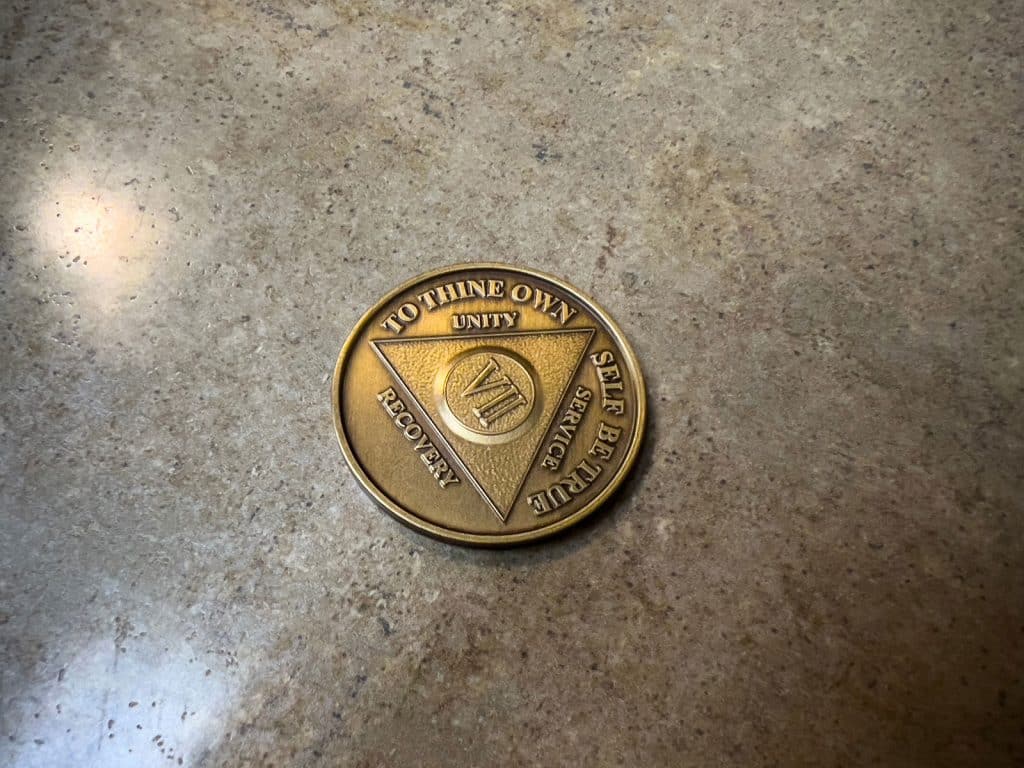
The exact history of sobriety coins is unknown. Some sources state that the idea was founded by Doherty S., who led an Alcoholics Anonymous group in Indianapolis in 1942. Others believe it originated when Sister Ignatia, a nun from Akron, Ohio, distributed Sacred Heart medallions to discharged patients as a symbol of their commitment to sobriety.
Before this, people carried personal mementos to celebrate their sobriety. Among them is Clarence Snyder, who founded the first AA group in Cleveland in 1939. After taking his last drink on February 11, 1939, Snyder carried a silver medallion to remind himself of his dedication to sobriety.
Today, sobriety coins are a well-established tradition in recovery communities worldwide. They’re most commonly used in Alcoholics Anonymous (AA) and Narcotics Anonymous (NA), but many 12-step programs have also adopted the practice.
How Do Sobriety Coins Work?
Recovery coins mark a person’s “milestones” or progress in sobriety. Here’s a look at these milestones, along with the chips associated:
- White Chip: Given immediately after joining, signaling a desire for sobriety. It’s also known as the “desire chip.”
- Silver Chip: Represents the first 24 hours of sobriety. It symbolizes hope, willingness, and a new beginning.
- Red Chip: Marks the first 30 days of sobriety. The initial 30 days are often considered the hardest, characterized by withdrawals, cravings, and the challenge of adjusting to life without alcohol. The 30-day AA coin is one of the most significant early milestones in recovery.
- Gold or Yellow Chip: Two months or 60 days of sobriety.
- Green Chip: Three months or 90 days of sobriety.
- Purple Chip: Four months of sobriety.
- Pink Chip: Five months of sobriety.
- Dark Blue Chip: Six months of sobriety—a momentous milestone that recognizes determination, resilience, and consistent progress.
- Copper Chip: Seven months of continuous sobriety.
- Red Chip: Eight months of sobriety.
- Purple Chip: Nine months of sobriety.
- Gold Chip: Ten months of sobriety.
- Green Chip: 11 months of sobriety.
- Bronze Chip: 1 year of sobriety. One of the most celebrated milestones representing strength, transformation, and the courage to keep moving forward.
NA groups may also use key tags or keychains to signify sobriety. NA color tags include:
- White key tag: Begin or restart the program
- Orange key tag: 30 days of sobriety
- Green key tag: 60 days of sobriety
- Red key tag: 90 days of sobriety
- Blue key tag: 6 months of sobriety
- Yellow key tag: 9 months of sobriety
- Glow in the dark key tag: 1 year of sobriety
- Gray key tag: 18 months of sobriety
- Black key tag: 2 or more years of sobriety
How Do Sobriety Coins Support Long-Term Sobriety?
By themselves, AA sobriety coins don’t hold monetary value. They’re usually made of metal or plastic, and can be purchased online or through recovery supply shops for just a few dollars. Their actual value lies in what they represent. Each coin is a reminder of the obstacles people in recovery have overcome and the progress they continue to make.
Here’s how sobriety coins support long-term recovery:
Motivation for Newcomers
Many of those who start their journey to recovery have doubts about whether they can achieve sobriety. Seeing tangible results of sobriety in others may inspire them to do the same. It reinforces the idea that if others can do it, then so can they.
Motivation During Challenging Times
Alcohol addiction is notoriously difficult to beat, with cravings lasting months or even years. During difficult moments, the coin can serve as a reminder to continue on the path to recovery. They made it this far; it would be a shame to lose all that progress because of poor judgment.
Community Support and Accountability
People who reach specific milestones in their recovery journey receive congratulations and recognition from their peers. Some groups even throw small parties or give gifts to people during their sobriety anniversary.
Tracking Progress
Sobriety coins keep those in recovery informed about their recovery progress and the challenges that come with it. For example, someone holding a 30-day coin may reflect on the cravings and withdrawals they faced in the first month, while a one-year coin might remind them of the daily choices and discipline it took to reach that point.
Boost Self-Esteem
People struggling with addiction often suffer from low self-esteem because the behaviors associated with addiction (self-neglect, shame, guilt) can erode self-worth. Sobriety coins can bring back self-worth by showing those in recovery that they’re capable of achieving goals and making positive changes.
Proof for Loved Ones
Addiction can breed distrust among family members. It isn’t uncommon for those suffering from addiction to lie about their alcohol use, how much they’ve had, or where they’ve been. Sobriety coins can serve as visible proof of progress, offering reassurance to loved ones that recovery is being taken seriously.
What To Do With AA Chips
You aren’t required to do anything specific with your AA chips.
Think of them as medals or tokens of recognition. You can place them on a mantle or stick them to your scrapbook.
Many people keep their chips in an accessible location, like a lock box, bag, or purse—somewhere they can see or touch whenever they’re feeling overwhelmed, sentimental, or in need of encouragement.
FAQ
Where can I buy sobriety coins, and what should I know before purchasing?