

Kratom (Mitragyna speciosa) is a tropical evergreen tree native to Southeast Asia, specifically in countries such as Cambodia, Thailand, Indonesia, Papua New Guinea, and Myanmar.
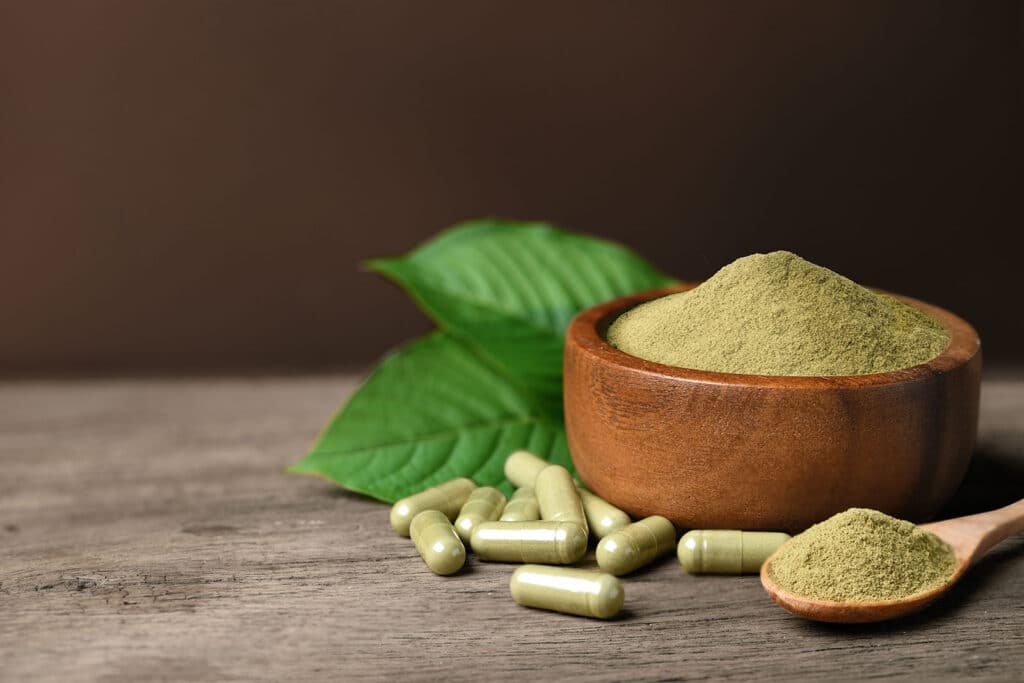
Kratom, often sold as a herbal supplement, is made from the leaves of the kratom tree. The leaves contain psychoactive and medicinal compounds like mitragynine and 7-hydroxymitragynine, which can produce stimulant- and opioid-like effects.
The Drug Enforcement Administration (DEA) lists kratom as a “drug of concern.” It’s illegal to buy, sell, possess, or use kratom in seven US states: Arkansas, Alabama, Indiana, Vermont, Rhode Island, Wisconsin, and Louisiana. It’s also banned in various cities and counties, such as San Diego, California; Denver, Colorado; and Sarasota County, Florida, among others.
In this article, we’ll answer all the questions you may have about kratom. How long does kratom stay in your system? Is kratom dangerous? Is it addictive? Continue reading to find out.

How Long Does Kratom Stay in Your System? (Kratom Detection)
As with most drugs, the length of time kratom stays in your system depends on the amount used, frequency of use, your metabolism, body fat, age, and liver function. Here are some general guidelines:
- Urine test: Detection time of up to 5 to 7 days after the last dose. In frequent or heavy users, it might be detectable for up to 14 days.
- Blood test: Typically stays in the blood for 1 to 3 days, but some sources suggest it may be found up to 7 to 9 days after last use.
- Saliva: Not detectible in saliva tests.
- Hair: Have a detection window of up to 90 days
Kratom isn’t a recognized medicinal drug, so it’s not included in most standard drug tests. Moreover, it requires specialized testing for detection. So, unless the doctor specifically tests for kratom, or the test is designed to detect mitragynine (its primary active compound), it’s unlikely to show up.
What Is the Half-Life of Kratom?
Some research shows that kratom, when taken intravenously (injection), has a half-life of 2.9 hours. Taken orally, it has a half-life of 6.6 hours to 9.43 hours, though some online publications state that the half-life of mitragynine is nearly 24 hours. At present, we don’t have exact figures due to the drug’s lack of research.
Is Kratom Dangerous?
In the black market, kratom is advertised and sold as a mood lifter, energy booster, pain reliever, and remedy for opioid withdrawal.
At low doses (1 to 5 grams), kratom rarely causes dangerous side effects. But in high doses (5 to 15 grams), kratom can cause tachycardia (a heart rate over 100 beats a minute), hypotension (low blood pressure), liver damage, hallucinations, seizures, and respiratory difficulties.
There has been no small number of deaths attributed to kratom use. According to a 2024 study published in the Journal of Addiction Medicine, Florida alone has seen 551 deaths with kratom exposure. Approximately 6.5% of these deaths involved kratom alone, while the rest involved multiple other drugs in addition to kratom.
So, while fatality is rare, kratom is still considered dangerous and should be avoided at all costs. Even if kratom doesn’t kill you outright, it can still pose serious health risks.
Long-term use can result in:
- Liver damage (hepatotoxicity)
- Kidney damage
- Cardiovascular strain (heart damage)
- Memory issues
- Poor concentration
- Mental health problems like anxiety or depression
- Psychosis (hallucinations, paranoia)
- Chronic constipation
- Lung and respiratory depression
- Darkening of skin, especially on the face or cheeks
Is Kratom Addictive?
Yes, kratom can be addictive. Kratom works similarly to opioids like morphine and codeine, both of which are highly addictive. Mitragynine and 7-hydroxymitragynine, two of kratom’s main active compounds, bind to the same opioid receptors in the brain, producing effects like:
- Pain relief
- Euphoria
- Stimulation (at lower doses)
- Sedation (at higher doses)
Long-term or high-dosage use of kratom can lead to tolerance, physical dependence, and withdrawal symptoms, much like traditional opioids.
Kratom’s addictive potential is considered lower than common opioids, especially when taken at lower doses. However, it can still cause psychological and physical addiction with continued and repeated use.
Since kratom isn’t regulated, kratom products may contain undisclosed ingredients, contaminants, or varying levels of active alkaloids. A product labeled as “low dose” could contain higher concentrations than stated, increasing the risk of overdose and dependence.
Kratom manufacturers want their products to be addictive, so many intentionally increase the level of active alkaloids. And since consumers can’t file a report for false advertising or mislabeling, they can easily get away with these illegal practices.
Common Kratom Withdrawal Symptoms
Kratom withdrawal symptoms are similar to those of opioid withdrawal but are often less intense. Because of this, some people see kratom as a “safer” or more manageable substitute to help them taper off stronger opioids.
According to the National Institute on Drug Abuse, common symptoms include:
- Loss of appetite
- Nausea
- Vomiting
- Jerky limb movements
- Abdominal pain and cramping
- Watery eyes
- Cravings
- Disturbed sleep
- Depression and anxiety
- Sweating
- Tremors
- Diarrhea
- Tension
- Restlessness
- Anger
- Hot flashes
Kratom withdrawal symptoms appear within 12 to 48 hours after the last dosage. These symptoms usually last 1 to 3 days, though some people experience symptoms that can last up to a week.
Emotional and psychological symptoms may persist 1 to 2 weeks after the last dose.
Post-Acute Withdrawal Syndrome (PAWS) may last weeks to months, making it difficult for some people to stay off the drug.
How Is Kratom Drug Addiction Treated?
Treatment for Kratom substance abuse follows the same plan as opioid addiction. Treatment options include:

Detoxification and Medication-Assisted Treatment (MAT)
For kratom, detox usually involves abstaining completely from the drug and managing withdrawal symptoms using medications like clonidine, antidepressants, and anti-anxiety drugs.
In severe cases, clinical professionals may prescribe medications like buprenorphine, methadone, and naltrexone off-label. These medications mimic the effects of opioids, helping ease cravings and withdrawal symptoms.
Behavioral Therapy
Behavioral therapies address the psychological and cognitive aspects of kratom addiction.
Two of the most common behavioral therapies for kratom addiction include Cognitive Behavioral Therapy (CBT) and Dialectical Behavioral Therapy (DBT).
CBT helps patients recognize and change addictive thought patterns and behaviors, develop coping skills, and manage triggers and cravings. DBT, meanwhile, focuses on emotional regulation, acceptance, and mindfulness.
CBT and DBT complement each other, so they’re often used together when treating substance addiction.
Aftercare and Support Groups
To ensure long-term recovery, patients are encouraged to attend aftercare programs, support groups, and peer support networks. These programs offer ongoing emotional support, accountability, and relapse prevention strategies that help individuals stay committed to sobriety.
Where to Find Kratom Addiction Treatment In Illinois
Illinois Recovery Center, located at 1450 Caseyville Avenue, Swansea, is one of the most well-regarded treatment centers in Illinois.
The center treats a variety of substance use disorders (SUD), including alcohol, opioids, kratom, benzodiazepines, and stimulants.
Our comprehensive programs include supervised detox with medication-assisted treatment, residential treatment, outpatient care, and individualized therapy plans. We also offer aftercare support, group therapy, and holistic therapies to support long-term recovery.
If you or a loved one is struggling with kratom addiction or other drug use, we can help. Contact us today if you’re seeking guidance, treatment, or just need someone to speak to.
FAQs
What other countries consider kratom illegal?
What is kratom commonly sold as?
How long do the effects of kratom last?
Does kratom appear on a standard 5-panel drug test?
Is kratom as strong as morphine?

Conclusion
Kratom may be marketed as a “natural” or “safer” alternative, but research and clinical evidence show it can remain in your system for days, carries serious health risks, and has addictive potential similar to opioids. Detection times vary depending on the type of test, frequency of use, and individual factors, but its effects on the body and mind can last far longer than the drug itself.
If you or someone you love is struggling with kratom use, know that help is available. With professional detox, therapy, and ongoing support, recovery is possible. By seeking treatment early, you can reduce the risks, overcome dependence, and move toward a healthier, drug-free life.