


Frequent alcohol consumption has been linked to many side effects that increase in intensity with extended periods of drinking. Heavy drinkers have reported symptoms ranging from bloating and trapped gas to abdominal pain and stomach cramping after drinking.
The most likely cause for stomach pain is alcoholic gastritis. Since alcohol is an irritant, it inflames the stomach lining, leading to constant aches and feelings of nausea.
However, there might be more reasons (also associated with your drinking habits) that could cause uncomfortable sensations in your belly or abdomen. This article discusses them in depth, then offers treatment tips to reduce stomach pain.
You’ll also learn about warning signs that indicate it’s time to seek professional help.
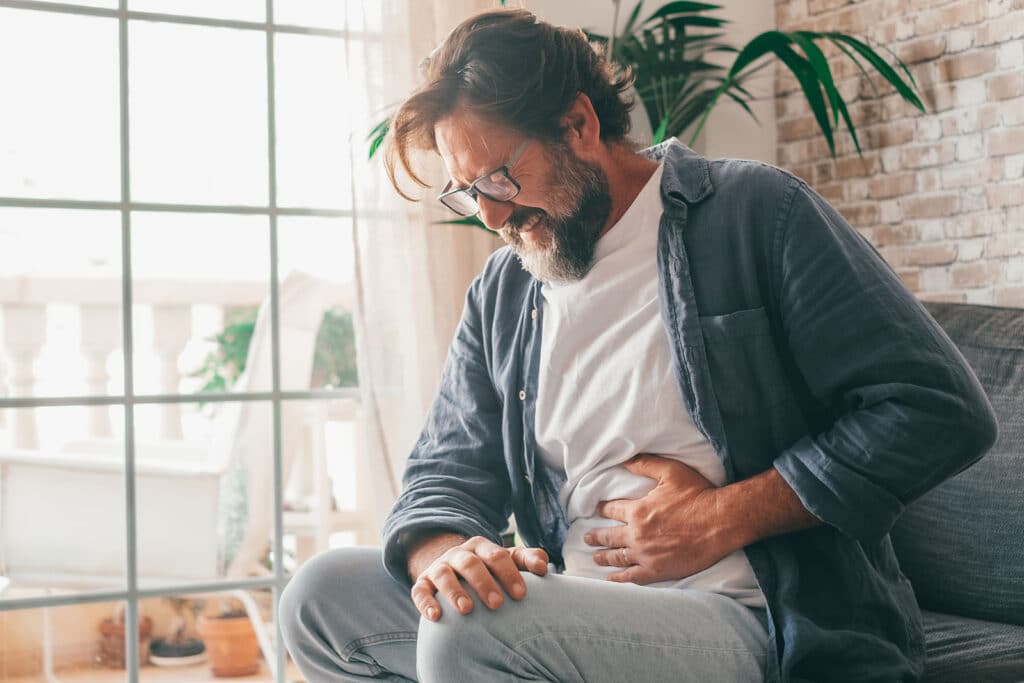
5 Causes of Stomach Pain After Drinking Alcohol
Hangovers (headaches, vomiting, nausea, fatigue, etc.) are what people would expect after heavy drinking. However, they may not be aware that any accompanying stomach pain could similarly be due to their alcohol consumption:
1. Alcoholic Gastritis
Drinking large amounts of alcohol hurts your stomach lining, the most exposed part of your digestive tract, by eroding the natural protective mucus layer. As a result, a chemical imbalance occurs in the stomach, triggering the production and release of higher levels of stomach acid.
Too much stomach acid makes you experience burning pain that some might mistake for indigestion, but instead it could be alcoholic gastritis.
The longer this cycle continues, the more likely you’ll develop stomach ulcers (peptic ulcers), which are painful open sores in the eroded stomach lining.
Some other worrying symptoms of gastritis include:
- Bloating and a feeling of fullness that worsen with eating
- Nausea
- Vomiting
- Vomiting blood, or black or tarry stools
- Loss of appetite
- Persistent pain between the navel and ribs
- Fatigue and shortness of breath for people with anemia (red blood cells or the hemoglobin inside them is lower than normal), especially with physical exertion
If you suffer from these symptoms without having consumed alcohol in large portions (or none at all), there may be other things causing your gastritis. A visit to a doctor for diagnosis will determine the precise reason, but here are some possible culprits:
- Eating too much spicy food
- Autoimmune diseases
- Stress
- Trauma
- Bacterial infections, most often Helicobacter pylori (H. pylori)
- Smoking
- Pernicious anemia
Important note: Mild gastritis can be resolved with medication or correcting eating and drinking habits, but if it goes untreated, it could advance into severe gastritis. This condition causes bleeding, leading to life-threatening complications.
2. Acute Pancreatitis
Acute pancreatitis is directly linked to alcohol: it’s a potentially dangerous condition where heavy alcohol consumption causes an inflammation of the pancreas. This disease is considered a medical emergency and requires immediate hospital admission.
Pay attention to the symptoms of acute pancreatitis; ignoring them could cause organ failure and permanent damage:
- Sudden, intense pain in the upper abdomen
- Persistent vomiting and nausea
- Loss of appetite
- Bloating
- Tenderness in the abdomen
- Increased heart rate
- Fever
- Pain spreading to the back (a serious sign that you need medical intervention)

3. Acid Reflux (GERD)
A less perilous possibility, acid reflux is expected when you drink large amounts of alcohol, and it’s another reason for stomach pain. What happens is that alcohol will affect the normal movement and function of the sphincter between the stomach and esophagus.
As a result, the stomach acid (which already exists in abundance) flows back into the esophagus. This leaves you with a burning feeling that starts in the stomach and spreads to the area behind the breastbone, better known as heartburn.
To know whether or not your alcohol-induced stomach pain is due to heartburn, look for these more specific signals:
- Constant burping
- Regurgitation
- A sour taste in your mouth
These symptoms are more noticeable when bending over or lying down.
4. Intolerance to Ingredients in Alcoholic Drinks
Sometimes, the answer could be as simple as being allergic or intolerant to a specific ingredient mixed into an alcoholic beverage. This might be the case if you get stomach pain after drinking despite being mindful of your alcohol intake, especially with beer or wine.
One example is histamine, which is released during the fermentation or brewing process. Histamine intolerance is associated with gastrointestinal distress, causing painful cramping.
You can tell if you have histamine intolerance by watching for its other symptoms:
- Irregular or rapid heart rate
- Diarrhea, vomiting, or nausea
- Headache
- Shortness of breath
- Low blood pressure
- Swollen lips, tongue, or throat
- Flushed face
- Runny or stuffy nose
Other potential chemicals that may trigger an allergic reaction are sulfites and similar preservatives found in alcoholic drinks.
5. Dehydration
It’s well-established that alcohol is a diuretic, meaning it causes the body to lose water at a faster rate than normal through the urinary system. If you don’t stay adequately hydrated to counter the diuretic effects of alcohol, you’ll be prone to dehydration.
Unfortunately, dehydration comes with its own set of annoying symptoms, and cramping in different areas of the body (including the stomach) is one of them.
Other signs of a dehydrated body vary based on the severity of the condition:
| Mild dehydration | Moderate dehydration | Severe dehydration |
| Thirst | Feeling too tired or sluggish | Rapid breathing and a fast heart rate |
| Dark yellow urine with a strong smell | Decreased urination | Unusual lethargy and confusion |
| Dry mouth and skin | Dizziness, headaches, and sunken eyes | Inability to produce tears or sweat, extreme thirst, and no urination for more than 8 hours |
Does It Matter How You Drink?
Yes. Stomach pain after a single night of binge drinking is usually acute gastritis or reflux, and it clears within a few days. Stomach pain that shows up after most drinking sessions, or that never fully goes away, points to a different drinking pattern: daily or near-daily alcohol consumption that keeps the stomach lining inflamed and never gives it time to heal.
Over months, that excessive alcohol consumption does more than irritate the stomach. It increases intestinal permeability (sometimes called leaky gut), drives gut inflammation, and interferes with how you absorb iron, B vitamins, and folate, which is why chronic drinkers often develop iron deficiency anemia on top of the pain.
The pattern is also diagnostic in its own right. If you’re drinking more than the recommended amount of alcohol most days and the stomach pain hasn’t changed your habits, that gap between knowing and stopping is one of the clearer signs of dependence on alcohol.
How to Relieve Stomach Pain Caused by Drinking?
Now with a full grasp of how binge-drinking could ultimately lead to stomach pain, bloating, or burning sensations, follow these guidelines to relieve this pain.
- Use acid-reducing medicines, not painkillers. Antacids give fast relief, H2 blockers such as famotidine reduce acid for several hours, and proton pump inhibitors such as omeprazole are what doctors prescribe for alcoholic gastritis treatment. If an H. pylori infection is found, it’s treated with a course of antibiotics. Avoid NSAIDs like ibuprofen, naproxen, and aspirin: they damage the stomach lining and make gastritis and ulcers worse.
- Limit your alcohol intake to two drinks per day for men and one drink per day for women, with alcohol-free days in between so the lining can recover.
- Stop drinking entirely if you’ve had acute pancreatitis, a bleeding ulcer, or severe gastritis. Both pancreatitis and GI bleeding are medical emergencies, and alcohol is the cause.
- Eat smaller meals more often. A full stomach stretches an inflamed lining. Build meals around lean protein, cooked vegetables, rice, and oats, and cut spicy foods, acidic foods like citrus and tomato, fatty or fried foods, and carbonated beverages until the pain settles.
- Drink water through the day to counter dehydration, and have a glass between alcoholic drinks when you do drink.
- Add probiotics from yogurt, kefir, or a supplement to help restore the gut bacteria alcohol disrupts.
- Try a low-histamine diet if you suspect histamine intolerance: steer clear of aged, fermented, and canned foods as well as processed meats, and notice whether beer and red wine are worse than clear spirits.
- Quit smoking. Nicotine increases stomach acid and slows ulcer healing, so smoking cessation matters as much as cutting back on alcohol if you do both.
When to Seek Professional Help for Stomach Pain?
As we’ve already pointed out, some causes of acute stomach pain that are linked to heavy drinking require seeing a doctor. At what point should you seek emergency care for your stomach aches?
- Sharp, severe pain that doesn’t let up
- Pain that expands to the back (a red flag for acute pancreatitis)
- Uncontrollable vomiting that doesn’t stop with medications
- Persistent lightheadedness, dizziness, fatigue, or a fever above 101°F
- Blood when vomiting or in your stool (due to gastrointestinal bleeding)
- Unexplained weight loss alongside ongoing stomach pain
Pain that isn’t an emergency but keeps coming back after drinking still deserves a doctor’s visit. Recurring episodes are how chronic gastritis announces itself, and your primary care doctor may refer you to a gastroenterologist.
How Doctors Diagnose Stomach Pain After Drinking
Because the same pain can come from gastritis, an ulcer, reflux, or the pancreas, diagnosis starts with your medical history and a physical examination. Expect to be asked directly how much and how often you drink; honest answers change what gets tested.
From there, the usual workup includes:
- Blood test: checks for anemia from slow bleeding, liver enzyme levels, and lipase, which is elevated in pancreatitis.
- H. pylori test: a breath test or stool sample to rule out the bacterial infection that causes most non-alcohol-related ulcers, and that alcohol makes worse.
- Upper endoscopy: a thin camera passed down the throat lets the gastroenterologist see the stomach lining directly and take a biopsy if anything looks abnormal. This is the definitive test for gastritis and ulcers.
- Imaging: a CT scan or ultrasound if pancreatitis or gallbladder problems are suspected.
None of these is painful, and most are done in a single visit. What they rule out matters as much as what they find: a clear endoscopy with ongoing pain often means the problem is the drinking itself, not the stomach.
What Is the Difference Between Acute Gastritis and Chronic Gastritis?
In acute gastritis, the pain you experience is mostly sudden and sharp, and it typically happens after a period of binge-drinking. It’s also accompanied by vomiting and nausea, but it goes away when you stop drinking.
On the other hand, chronic gastritis develops gradually over months of heavy drinking. The stomach lining enters a cycle of being irritated by alcohol consumption and the production of more stomach acid, slowly eroding the protective mucus layer.
Chronic gastritis is identified by aches in the stomach that keep getting more intense as the months of drinking roll by. In addition, it causes persistent heartburn, constant fatigue, and appetite loss.
If it goes undiagnosed and untreated, chronic gastritis leads to the formation of stomach ulcers, polyps, scarring and narrowing of the stomach, and a higher long-term risk of stomach cancer. This is why it’s much more dangerous than its acute counterpart.
Still, people who aren’t aware of the harmful impact of acute gastritis (or don’t even know about it) have a higher chance of developing chronic gastritis. With that in mind, it’s advisable to take early warning signs of both conditions seriously.

Final Words: Illinois Recovery Center for Alcohol Use Disorder
Stomach pain after drinking alcohol is caused by several factors. Some of them are pretty serious (like acute pancreatitis or severe alcoholic gastritis), while others are easier to manage and treat (acid reflux and dehydration).
By familiarizing yourself with early warning signs of each condition, you’ll know the right action to take before the symptoms become more intense. Or, in cases like acute pancreatitis, you’ll seek medical help at once.
Here’s the part most articles on this topic skip: alcoholic gastritis treatment only works if the drinking stops. Antacids and proton pump inhibitors calm the lining, but if alcohol keeps irritating it, the pain comes back, the ulcers return, and the damage progresses. For a lot of people, the stomach is where alcohol addiction first becomes impossible to ignore.
If you’ve tried to cut back because of the pain and couldn’t, that’s alcohol use disorder, and willpower isn’t the treatment. The Illinois Recovery Center offers alcohol detox with medical monitoring for withdrawal symptoms, which can be dangerous after heavy daily drinking, followed by residential or outpatient rehab, therapy, and relapse prevention planning. Treatment plans are built around each patient’s medical history, including the stomach and liver damage that drinking has already done, and aftercare and support groups keep you connected once the program ends.
Get the stomach looked at. Then get the drinking looked at. They’re the same problem.