

When you’re feeling under the weather, you might reach for DayQuil to ease your flu symptoms. But what happens if you want to have a drink later?
Many people wonder if four hours is enough time to wait after taking this over-the-counter medication. The short answer is no; mixing alcohol with DayQuil can be dangerous, even hours later.
What Is DayQuil and What Does It Contain?
DayQuil is a popular cold medicine that helps treat multiple flu symptoms at once. This OTC medication contains three active ingredients that work together to make you feel better.
Acetaminophen is the first ingredient. It acts as both a pain reliever and a fever reducer. You might know this ingredient better as Tylenol. It helps reduce headaches, sore throat pain, and brings down your fever.

The second component is dextromethorphan, also called DXM. This cough suppressant works in your central nervous system to alleviate the annoying cough that keeps you up at night.
Phenylephrine is the third ingredient, and it’s a decongestant that helps clear your stuffy nose. It works by reducing swelling in your nasal passages, making it easier to breathe.
Note: Each of these ingredients can interact with alcohol in different ways. That’s why healthcare professionals warn against mixing alcoholic beverages with cold medications, such as DayQuil.
Key Ingredients
| Ingredient | Purpose in DayQuil | How It Interacts With Alcohol | Risk Level |
| Acetaminophen | Pain reliever & fever reducer | Both are processed by the liver. Combined use produces NAPQI, a toxic byproduct that damages liver cells. | Life-Threatening |
| Dextromethorphan (DXM) | Cough suppressant (CNS depressant) | Both depress the central nervous system. Combination intensifies drowsiness and can cause dangerously slow breathing (respiratory depression). | Severe |
| Phenylephrine | Nasal decongestant | Alcohol can amplify or counteract its cardiovascular effects, leading to unpredictable blood pressure spikes or drops and rapid heart rate. | Moderate to Severe |
Is It Safe to Drink Alcohol 4 Hours After Taking DayQuil?
No, it’s not safe to drink alcohol just four hours after taking DayQuil. While this might seem like enough time, your body is still processing the medication’s active ingredients.
Healthcare providers recommend waiting at least 6 hours, and many suggest waiting even longer. For instance, the acetaminophen in DayQuil causes a risk of liver damage when combined with any amount of alcohol.
Even a single drink can create dangerous interactions. Your liver works hard to process both substances, and combining them puts excessive strain on this vital organ. So, always consult your healthcare professional before mixing any flu medications with alcoholic beverages.
How Long Should You Wait Before Drinking?
As mentioned, most medical experts recommend waiting 6 hours after your last dose of DayQuil before consuming alcohol. However, this timeline can vary based on several factors.
Your metabolism, for example, plays a big role in how quickly your body processes the medication. Some people metabolize drugs more slowly than others, meaning they need to wait longer.
Additionally, the recommended dose you took also matters since higher doses stay in your system longer. Finally, your overall health conditions, liver function, and other medications can affect timing, too.
What Happens When You Mix Alcohol with DayQuil?
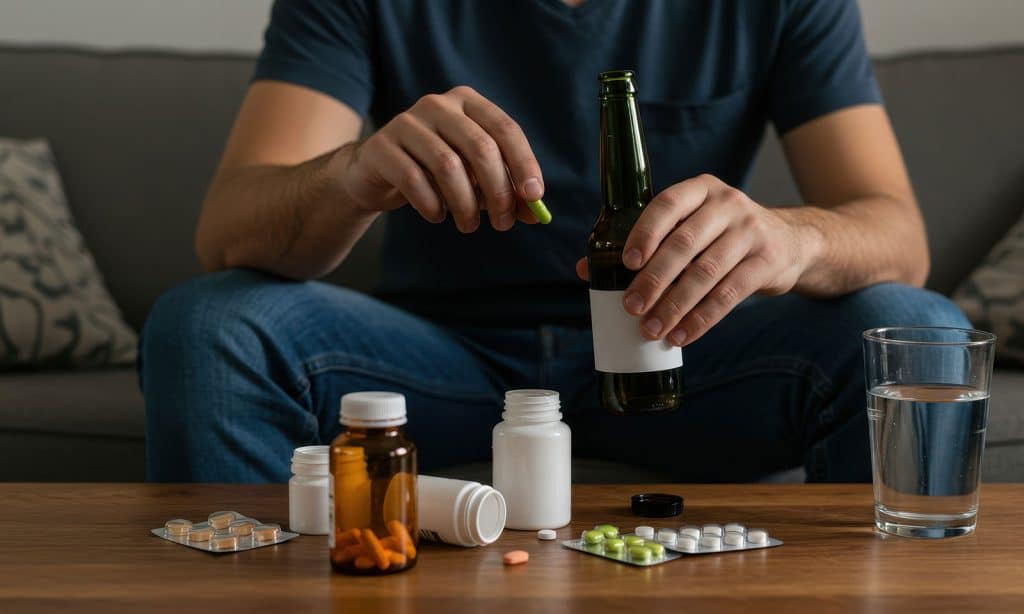
Mixing alcohol with DayQuil creates dangerous interactions between the substances. The acetaminophen in DayQuil combined with alcohol can cause serious liver damage or even liver failure.
When your liver tries to process both substances together, it produces a toxic compound called NAPQI that damages liver cells.
As for the dextromethorphan ingredient, it increases drowsiness and can cause respiratory depression when mixed with alcohol. This means your breathing could slow to dangerous levels.
Phenylephrine affects your blood pressure and heart rate. Alcohol consumption can make these effects unpredictable. These interactions can happen even with small amounts of alcohol, making any combination potentially life-threatening.
What Are the Dangerous Side Effects of Mixing These Substances?
The side effects of mixing DayQuil and alcohol range from uncomfortable to life-threatening.
Common immediate effects include severe drowsiness, dizziness, and lightheadedness that can lead to dangerous falls or accidents. You might experience nausea, confusion, and loss of coordination.
More serious effects include respiratory depression, where your breathing becomes dangerously slow or shallow. The combination can cause rapid heartbeat, high blood pressure, and excessive amounts of strain on your cardiovascular system.
Long-term mixing can lead to severe liver damage, liver disease, or complete liver failure. In extreme cases, an acetaminophen overdose from this combination can be fatal, especially since symptoms don’t appear until days later.
Immediate Side Effects of Mixing Alcohol & DayQuil
| Severity | Symptoms | Description | Typical Onset | Duration |
| Mild | Anxiety, irritability | Restlessness, mood swings, general unease | 6–12 hours | 1–3 days |
| Mild | Insomnia, sweating | Difficulty sleeping, night sweats, elevated body temperature | 6–12 hours | 1–3 days |
| Mild | Nausea, loss of appetite | Stomach upset, reduced desire to eat | 6–12 hours | 1–3 days |
| Moderate | Tremors, rapid heartbeat | Hand tremors, elevated pulse, increased blood pressure | 12–24 hours | 3–5 days |
| Moderate | Confusion, agitation | Disorientation, difficulty concentrating, heightened emotional reactivity | 12–24 hours | 3–5 days |
| Moderate | Vomiting, diarrhea | Gastrointestinal distress, risk of dehydration | 12–24 hours | 3–5 days |
| Severe | Seizures | Uncontrolled electrical brain activity; medical emergency | 24–72 hours | Requires medical intervention |
| Severe | Delirium tremens (DTs) | Severe confusion, hallucinations, fever, cardiovascular instability | 48–72 hours | 5–7 days (can be fatal without treatment) |
| Severe | Hallucinations | Visual, auditory, or tactile hallucinations | 24–48 hours | 3–5 days |
Key Warning Signs
Seek emergency medical attention immediately if experiencing:
- Seizures
- Delirium tremens (severe confusion, hallucinations, agitation)
- Difficulty breathing
- Chest pain or rapid heartbeat
- Severe hallucinations
- Loss of consciousness
- Suicidal thoughts

Who Is Most at Risk When Combining Alcohol and Cold Medicine?
Certain groups face higher risks when mixing alcohol with OTC medications. People with existing health conditions, especially liver disease or high blood pressure, are particularly vulnerable to adverse effects.
Those taking high doses of cold medicine or consuming excessive amounts of alcohol multiply their risk of dangerous interactions. People suffering from alcohol addiction face the greatest danger because they may not realize how much they’re drinking or may ignore safety warnings.
Individuals taking other medications alongside DayQuil are at increased risk of potential interactions. This includes prescription drugs for mental health conditions, blood pressure medications, or other pain relievers containing acetaminophen.
Older adults metabolize substances more slowly, making them more susceptible to severe side effects. Additionally, people with compromised immune systems or those recovering from illness may have reduced liver function. That makes it harder to process both alcohol and meds safely.
Finally, anyone with a history of substance use disorder should be especially cautious. Mixing substances can trigger relapse or worsen addiction patterns.
| Risk Category | Why Higher Risk | Key Concern | Risk Level |
| Existing liver disease | Compromised liver cannot process acetaminophen and alcohol simultaneously; NAPQI buildup accelerates | Liver failure | Critical |
| Heavy or chronic alcohol use | Chronic alcohol use depletes glutathione (the antioxidant that neutralizes NAPQI), increasing liver toxicity even at standard acetaminophen doses | Liver toxicity, addiction escalation | Critical |
| Taking multiple medications | Other drugs (especially those containing acetaminophen, sedatives, or CNS depressants) compound interaction effects | Overdose, respiratory depression | High |
| Older adults (65+) | Slower metabolism means both substances remain active in the body longer; reduced liver and kidney function | Prolonged side effects, falls | High |
| History of substance use disorder | Mixing substances can trigger relapse; impaired judgment may lead to exceeding safe doses | Relapse, overdose | High |
| High blood pressure | Phenylephrine already raises blood pressure; alcohol makes cardiovascular effects unpredictable | Hypertensive crisis | Moderate to High |
| Currently ill or immunocompromised | Illness already taxes the liver and immune system; adding alcohol and medication strains recovery | Slower recovery, dehydration | Moderate |
Could This Mixing Pattern Signal a Substance Use Problem?
Regularly mixing alcohol with cold/cough medicine can indicate a developing alcohol use disorder or substance abuse problem. People suffering from addiction might use OTC medications to enhance alcohol’s effects or mask withdrawal symptoms.
Such dangerous behavior often starts innocently but can quickly spiral into a serious medical condition requiring professional intervention.
Warning signs include taking cold medicine when you’re not sick, using higher than recommended doses, or feeling unable to drink without also taking medication.
Some people mix these substances to achieve sedative effects or to self-medicate underlying mental health issues, such as anxiety or depression. This pattern can indicate both alcohol addiction and potential medication misuse.
Early intervention can prevent serious health complications and help address underlying addiction issues. Don’t wait for symptoms to worsen.

What Treatment Options Are Available?
The first step often involves medically supervised detox or medication-assisted treatment to manage withdrawal symptoms safely.
Treatment facilities also offer both inpatient and outpatient addiction treatment programs, depending on individual needs. Additionally, behavioral therapy helps address underlying mental health issues and teaches healthy coping strategies.
Many treatment centers also offer specialized programs for people who mix alcohol with OTC medications. Support groups, family therapy, and aftercare planning guarantee long-term success.
| Treatment Type | What It Involves | Best For | Setting |
| Medical Detox | 24/7 medical supervision to manage withdrawal symptoms safely; may include medications to ease discomfort and prevent seizures | Physical dependence on alcohol or DXM | Inpatient facility |
| Medication-Assisted Treatment (MAT) | FDA-approved medications (e.g., naltrexone, acamprosate) combined with counseling to reduce cravings and prevent relapse | Alcohol use disorder, long-term recovery support | Inpatient or outpatient |
| Cognitive Behavioral Therapy (CBT) | Identifies and restructures thought patterns that drive substance use; builds healthier coping strategies | Co-occurring mental health issues, relapse prevention | Outpatient or inpatient |
| Dialectical Behavior Therapy (DBT) | Focuses on emotional regulation, distress tolerance, and interpersonal skills; particularly effective for people who self-medicate | Emotional dysregulation, self-medicating behaviors | Outpatient or inpatient |
| Inpatient Rehabilitation | Structured residential program with individual and group therapy, medical support, and life skills training | Severe addiction, lack of stable home environment | Residential facility |
| Outpatient Programs (IOP/PHP) | Scheduled therapy sessions (individual, group, family) while living at home; varies from a few hours per week to several hours per day | Mild to moderate substance use, step-down from inpatient | Outpatient clinic |
| Support Groups | Peer-led groups (e.g., AA, SMART Recovery) providing accountability, shared experience, and ongoing community support | Long-term maintenance, community connection | Community-based or virtual |
Get Help Before It Gets Worse
Mixing DayQuil and alcohol might seem harmless, but as we’ve covered, even a single drink can put your liver and overall health at serious risk. If you find yourself regularly combining alcohol with over-the-counter medications — or struggling to stop drinking even when you know the risks — that’s a sign it may be time to reach out for help.
Illinois Recovery Center offers confidential, personalized treatment for alcohol use disorder and substance misuse. From medically supervised detox to outpatient therapy, our compassionate team will work with you to build a recovery plan that fits your life.
Call us today to take the first step.
FAQs
Can I drink alcohol 4 hours after taking DayQuil?
How long does DayQuil stay in your system?
Can I have just one beer after taking DayQuil?
What should I do if I accidentally mixed DayQuil and alcohol?
Is NyQuil safer to mix with alcohol than DayQuil?
Can I take DayQuil the morning after drinking?